Joysway Australia
Joysway Fishing Surfer Bait Boat with Fish Finder
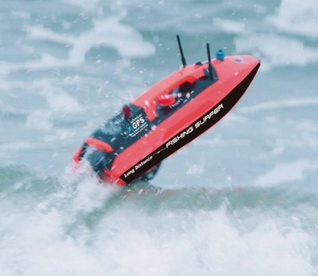
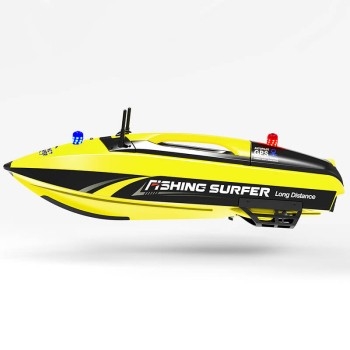
Everything the Fishing Surfer does, plus a Toslon TF520 colour fish finder so you can see what's…
From$1,999

Improve your catch with the ultimate RC bait boat fish finder from Baitboats. Our bait boats with fish finders integrate cutting-edge sonar systems to locate fish with precision, perfect for surf, saltwater, and freshwater angling across Australia. Designed with durable builds and long-range 2.4GHz controls, these boats deliver bait accurately while their fish finder technology scans depths, boosting your catch rate. Ideal for Aussie anglers, our range features top models with GPS compatibility and easy-to-use interfaces.
Everything the Fishing Surfer does, plus a Toslon TF520 colour fish finder so you can see what's…
A fish finder integrated into a bait boat is a genuine fishing tool when it is done well, and a spec-sheet feature when it is not. These five factors determine whether the fish finder capability you are paying for will actually help you catch more fish.
Look for models where the sonar is factory-designed as part of the system. Aftermarket bolt-on additions can work but factory-integrated fish finders have purpose-matched transducer placement and calibrated depth readings optimised for the specific hull design.
Lower frequencies (83kHz and below) cover a wider cone and show structure well in deep water. Higher frequencies (200kHz and above) give finer detail in shallower water. Dual-frequency models let you switch based on conditions, making them the most versatile choice.
A colour sonar display separates bottom types and depth layers clearly at a glance. Monochrome displays are harder to read in bright Australian sunlight. Check that the display is viewable under typical fishing conditions before committing.
A fish finder without GPS is half the tool. GPS lets you tag every productive sonar reading to a precise location. The two features together turn a single session's data into a permanent fishing map that improves every return trip.
The fish finder adds continuous draw to the boat's battery. A boat rated at 90 minutes may run 60 to 70 minutes with the fish finder active. Ask specifically about runtime with sonar running, not just the headline battery spec without it.
Importing RC bait boats from overseas leads to high shipping costs, complex warranty claims, and long waits when you need spare parts. Buying from an Australian supplier gives you:

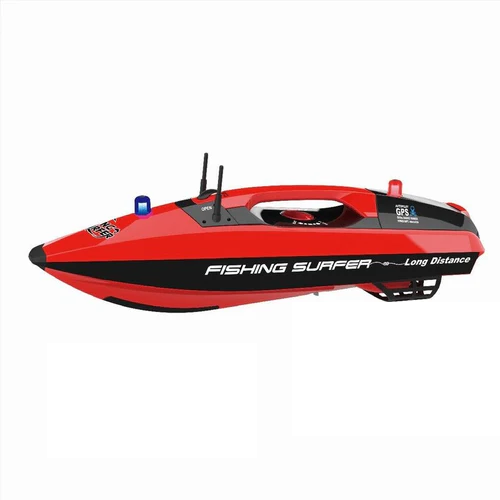
Everything the Fishing Surfer does, plus a colour Toslon fish finder so you see what's beneath the boat before you drop. $300 off while stocks last.
Fish finders show depth, bottom type, and fish position as signal echoes. Taking 20 minutes at home with the manual means you interpret readings accurately on the water rather than guessing at what you see. Invest in the reading before you invest in the day's fishing.
Use sonar to locate the transition from shallow to deep before you bait a spot. Most freshwater species hold along these transitions rather than in featureless open water. Once you mark this on GPS, you can return to within metres of the same structure every session.
Sonar shows transient fish targets that move in and out of the scan cone quickly. Instead of chasing individual marks, look for consistent bottom features and concentrations of baitfish. These patterns tell you far more about where to focus than any individual fish echo.
Mark productive bottom features at saved GPS coordinates as you scan. Over multiple sessions you build an accurate map of your lake or estuary that improves catch rates progressively. The combination of GPS and sonar is what turns the fish finder from a gadget into a systematic advantage.
"Got it out past the second bank at Stockton and dropped a bait right on a mulloway I could never have reached by hand. Worth every cent."
"Sent a big shark bait 400m off the beach at Mandurah on my first session. Had a bronze whaler on within the hour. Could never have done that with a rod."
"Had a cheap one pack it in after a season. The Joysway is a completely different animal. Been using it for snapper and flathead out in the bay. These blokes know fishing."
A transducer mounted beneath the hull sends sonar pulses downward and reads the returning echoes. Depth, bottom hardness, and fish position are displayed on the controller screen in real time as the boat moves across the water. You see the underwater picture from the bank as you navigate.
Depth readings are accurate to within 5 to 10 percent on quality transducers. Bottom type accuracy depends on the frequency and algorithm used. Quality fish finder boats display consistent readings that reliably identify weed, hard bottom, and depth changes on each pass.
For anglers targeting specific structure like drop-offs, weed edges, and submerged timber, yes. The fish finder removes guesswork from bait placement and helps you find productive water much faster. For broad flat-water bait spreading in simple environments, the premium is less immediately justified.
For the mix of shallow lakes, deep reservoirs, and estuaries typical of Australian fishing, a dual-frequency model is the most versatile. Use high frequency in shallow water for fine detail, and switch to low frequency for deep reservoir work where wider cone coverage matters more.
The Joysway models with integrated fish finder are rated for saltwater. Freshwater-optimised models with fish finders are not recommended for extended saltwater exposure. Follow standard saltwater rinse protocols after any coastal use regardless of what the model is rated for.
Still have a question? Send us an enquiry →